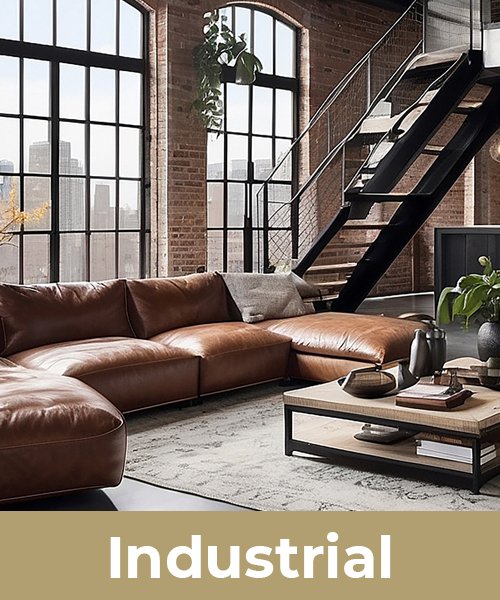


Industrial
Interior Style
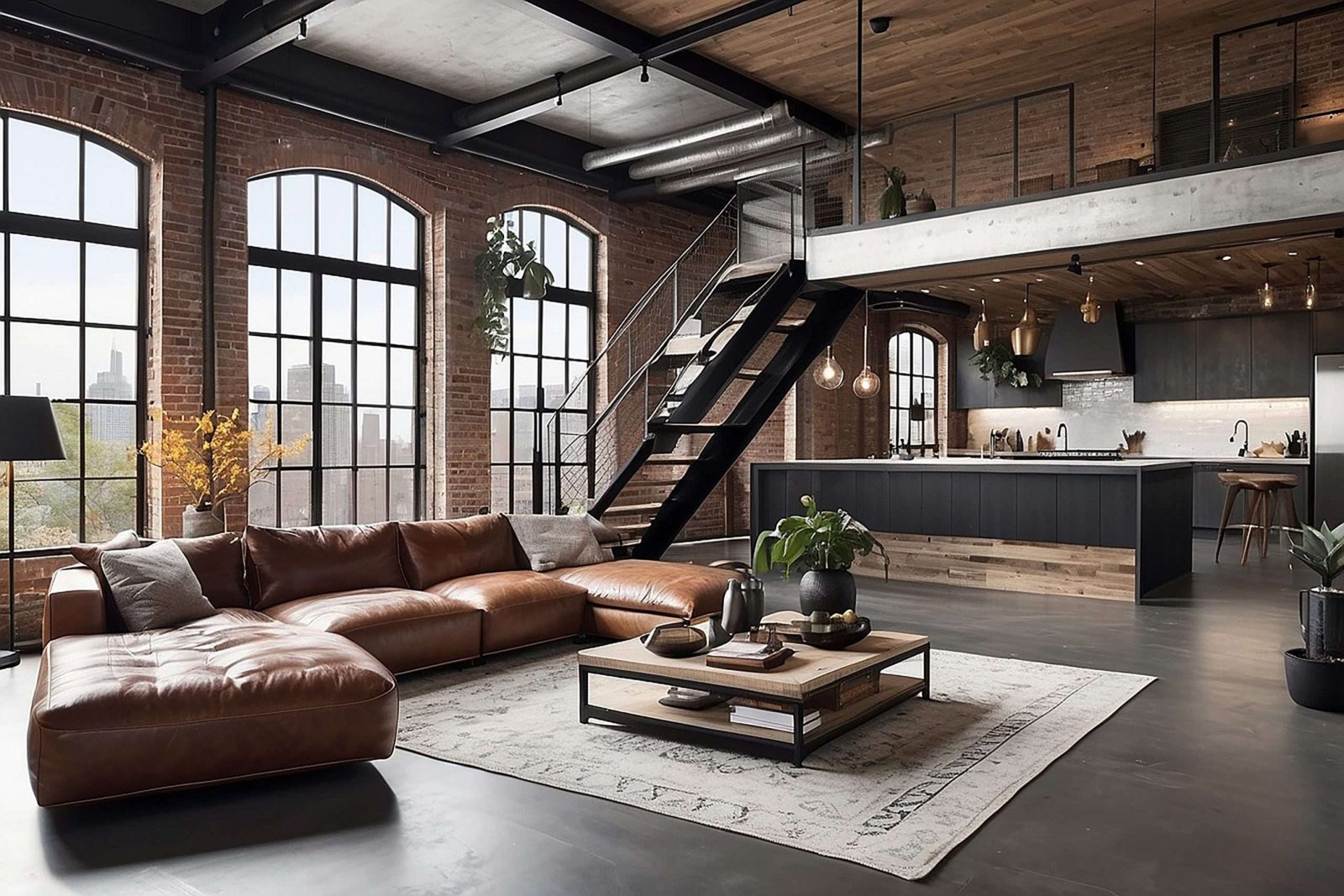
Vintage and Repurposed Furniture:
Vintage furniture pieces, often made from reclaimed wood or metal, are commonly used in industrial interiors. These pieces add character and warmth to the space while complementing the industrial aesthetic.
Exposed Structures:
Exposed beams, ductwork, and pipes are common in industrial design. Instead of hiding these structural elements, they are often left exposed to add visual interest and authenticity to the space.
Open Floor Plans:
Industrial spaces typically have open floor plans with few walls or partitions. This layout creates a sense of spaciousness and allows for flexibility in how the space is used.
Neutral Color Palette:
Industrial interiors often feature a neutral color palette dominated by shades of gray, black, brown, and white. These colors provide a backdrop for the raw materials and industrial elements to stand out.
Vintage and Repurposed Furniture:
Vintage furniture pieces, often made from reclaimed wood or metal, are commonly used in industrial interiors. These pieces add character and warmth to the space while complementing the industrial aesthetic.
Industrial Lighting:
Lighting fixtures in industrial interiors are typically simple and functional, often featuring exposed bulbs, metal shades, and wire cages. Pendant lights, track lighting, and floor lamps are popular choice.
Utilitarian Objects:
Industrial design embraces utilitarian objects and furnishings that serve a purpose beyond mere decoration. This can include items like metal shelving units, storage cabinets, and workbenches.
Urban Accents:
Industrial interiors often incorporate urban accents such as graffiti art, vintage signage, and industrial-inspired accessories to further enhance the industrial vibe.
Recent Stories