

Retro
Interior Style
History
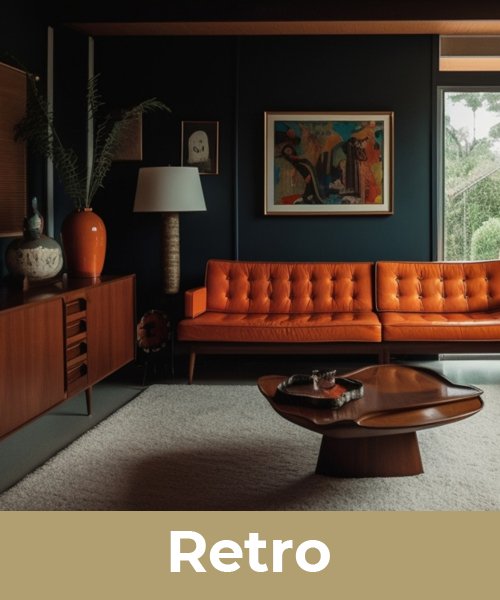
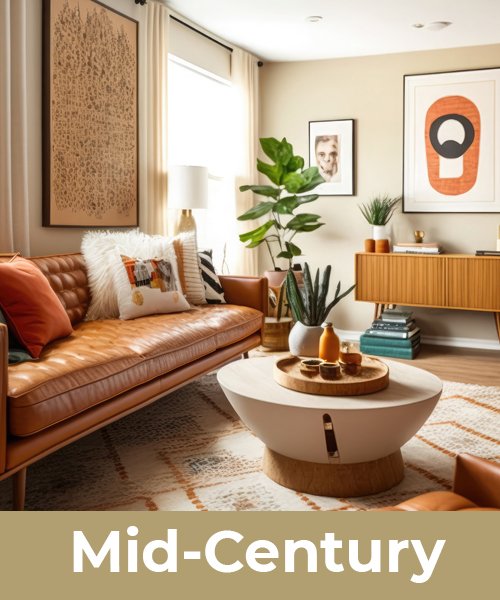
Retro interior design style takes inspiration from past decades, often featuring elements from the mid-20th century, particularly the 1950s, 60s, and 70s.
Color Palette:
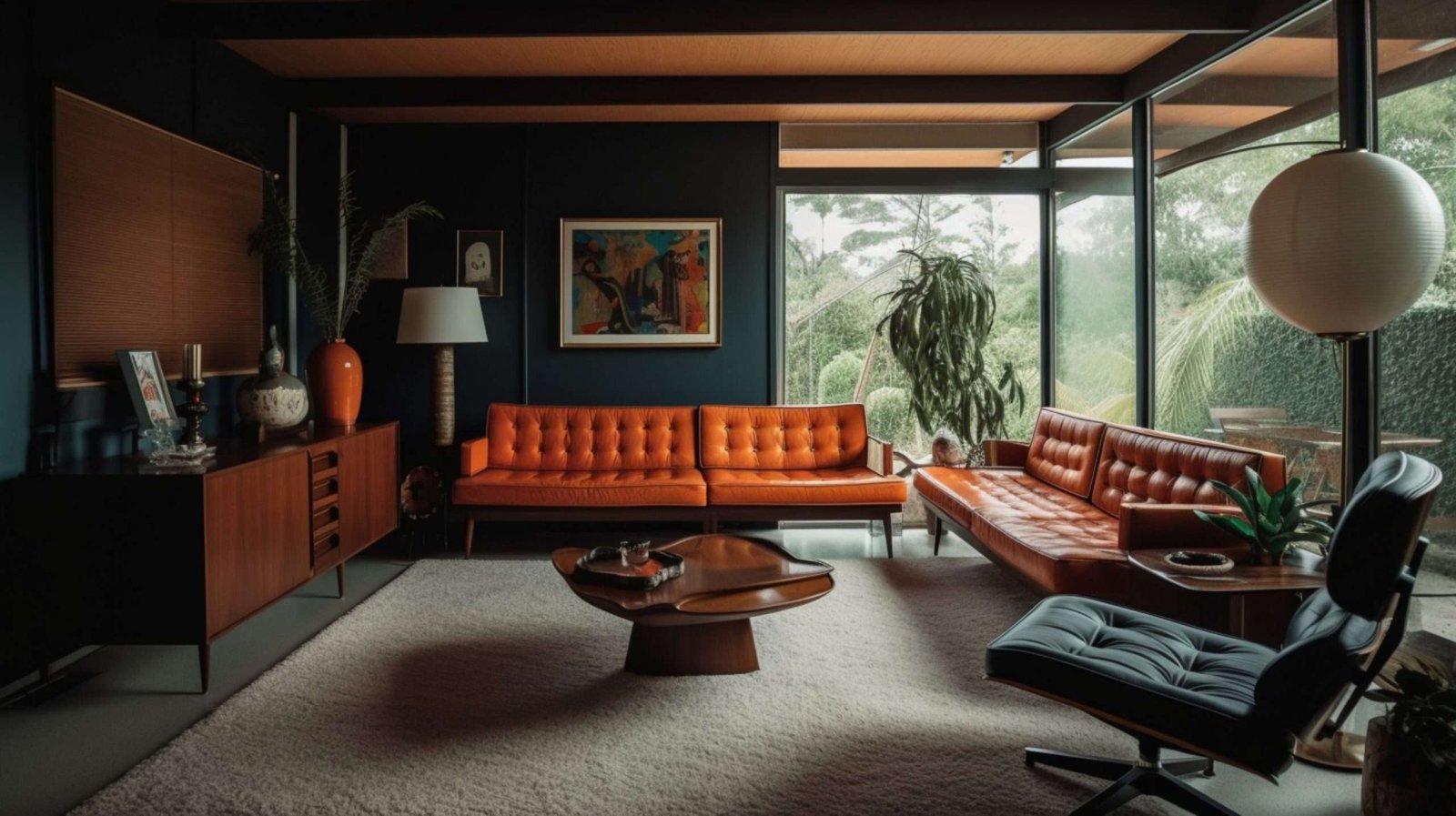
Bold and vibrant colors are characteristic of retro design. Think avocado green, mustard yellow, burnt orange, and turquoise. Use these colors on walls, furniture, and accessories to create a lively atmosphere.
Furniture:
Look for furniture with sleek lines and geometric shapes, often with tapered legs. Mid-century modern pieces, such as Eames chairs or tulip tables, are popular choices for a retro look. Don’t be afraid to mix and match different styles from various decades for an eclectic feel.
Patterns and Textures:
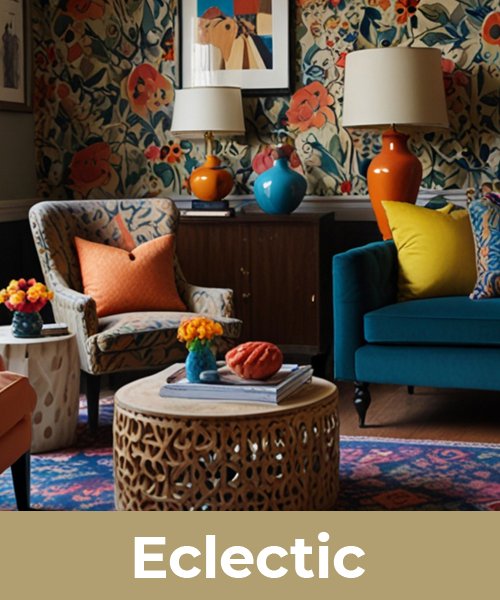
Incorporate retro patterns like geometric shapes, bold stripes, and floral prints into upholstery, curtains, and rugs. Textures like shaggy rugs, velvet upholstery, and wood paneling can also enhance the retro vibe.
Accessories:
Decorate with vintage accessories like lava lamps, vinyl records, retro telephones, and rotary dial phones. Display collections of vintage items such as glassware, ceramics, or old cameras to add personality to your space.
Lighting :
Choose statement lighting fixtures with a retro flair, such as sputnik chandeliers, pendant lamps with colorful shades, or arc floor lamps. These can serve as focal points in the room and add to the overall retro aesthetic.
Wall Art :
Hang retro-inspired artwork, posters, or prints to tie the theme together. Vintage advertisements, pop art pieces, or black and white photographs from the era can all contribute to the retro feel.
Mix in Modern Touches:
While embracing retro style, it’s also important to incorporate modern conveniences and comforts. Blend vintage pieces with contemporary elements to create a balanced and functional space.
Keep it Cohesive:
Although retro design allows for a mix of styles and influences, strive for coherence in your design by sticking to a consistent color palette and overall theme throughout the space.
Remember, the key to successful retro interior design is to have fun and experiment with different elements until you achieve the desired nostalgic ambiance.
Recent Stories