

Mid-Century Modern
Interior Style
History
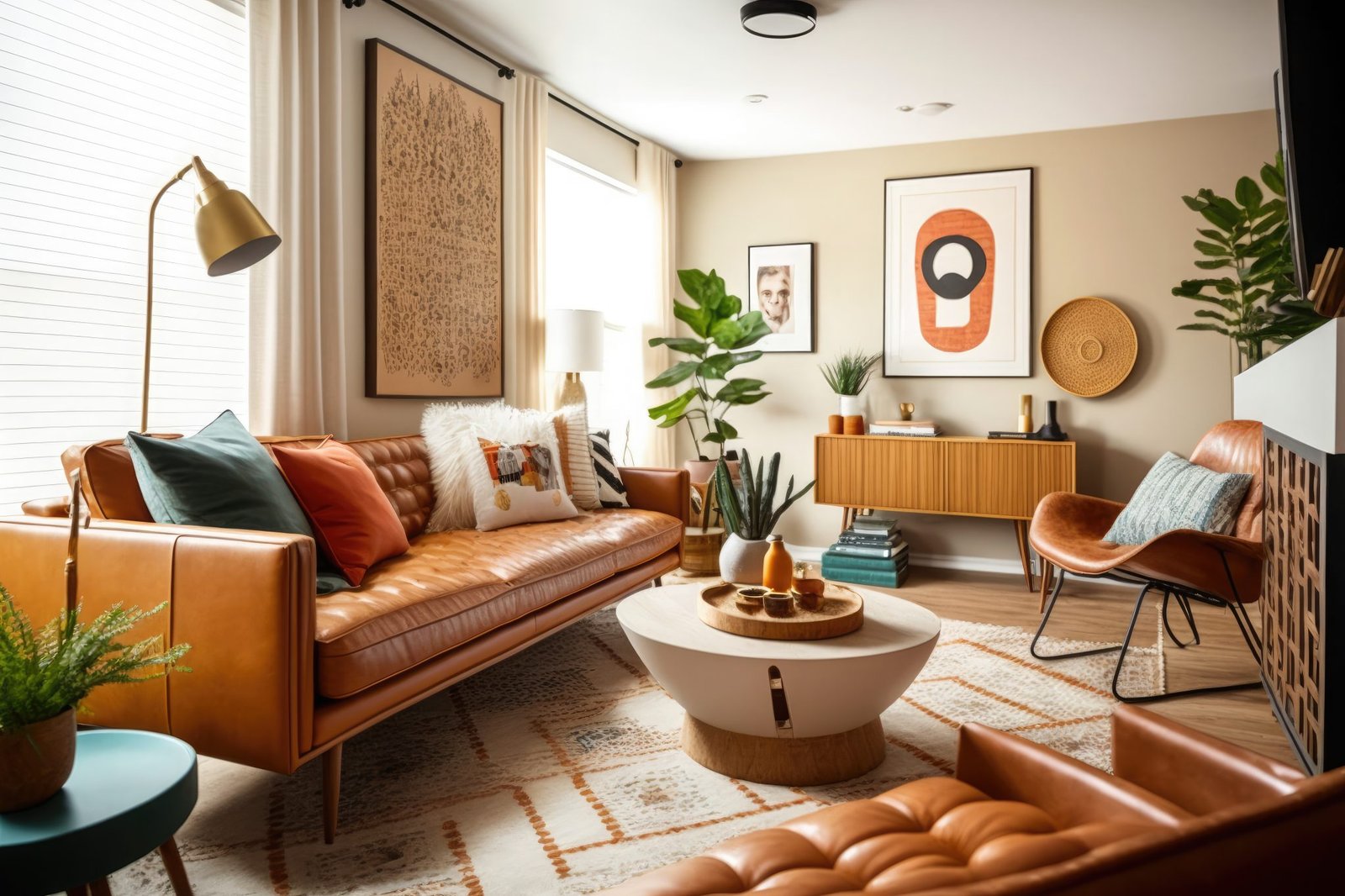
Mid-Century Modern interior design emerged in the mid-20th century, roughly spanning from the 1930s to the 1960s, with its peak popularity in the 1950s and 1960s. It’s characterized by clean lines, minimalist forms, and a focus on functionality. Here’s an overview:
Clean Lines and Organic Forms:
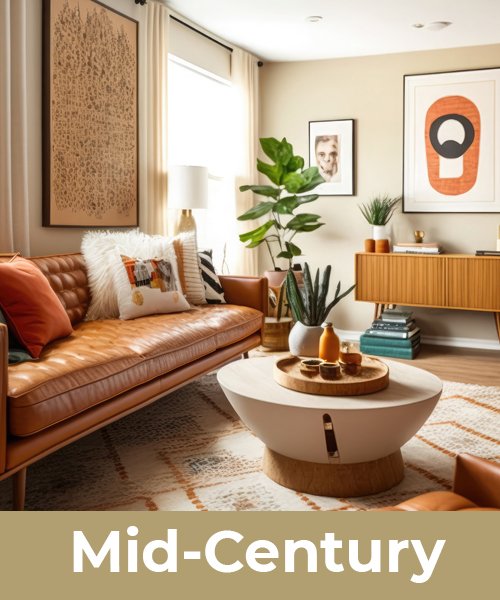
Mid-Century Modern design emphasizes simplicity and functionality. Furniture and architectural elements often feature clean, straight lines with gentle curves inspired by nature.
Natural Materials:
Wood is a key element in Mid-Century Modern design, often showcased in furniture such as chairs, tables, and cabinets. Teak, walnut, and oak are commonly used. Other materials include glass, metal, and leather.
Open Floor Plans:
Mid-Century Modern homes often have an open layout that promotes fluidity between spaces. Large windows and sliding glass doors are also common, allowing plenty of natural light to enter the interior.
Bold Colors:
While Mid-Century Modern design tends to favor neutral tones like white, beige, and gray, bold accent colors such as mustard yellow, avocado green, and burnt orange are also prevalent. These colors add warmth and personality to the space.
Iconic Furniture Pieces:
Mid-Century Modern design is renowned for its iconic furniture pieces, many of which have become design classics. Examples include the Eames Lounge Chair, the Noguchi Coffee Table, and the Barcelona Chair.
Functionality:
Mid-Century Modern design prioritizes functionality without sacrificing style. Furniture pieces are often multi-functional and designed to serve a specific purpose while maintaining a sleek aesthetic.
Geometric Patterns:
Geometric patterns, such as chevron, herringbone, and abstract shapes, are commonly found in Mid-Century Modern interior design. These patterns add visual interest and can be incorporated through rugs, upholstery, and artwork.
Minimalist Approach:
Mid-Century Modern design embraces minimalism, with an emphasis on decluttered spaces and the principle of “less is more.” Furniture and decor are carefully curated, and unnecessary embellishments are avoided.
Iconic Lighting Fixtures:
Lighting plays a crucial role in Mid-Century Modern interiors. Sputnik chandeliers, arc floor lamps, and pendant lights with clean, geometric shapes are popular choices that contribute to the overall aesthetic.
Mix of Old and New:
While Mid-Century Modern design originated in the mid-20th century, contemporary interpretations often blend vintage pieces with modern elements to create a timeless look that feels fresh and relevant.
Overall,
Mid-Century Modern interior design continues to be celebrated for its timeless appeal, blending form and function to create stylish and comfortable living spaces.
Recent Stories